

Why Every Campaign Should Include Outdoor and Digital OOH Advertising
As digital advertising faces growing challenges—banner blindness, rising cost-per-click, cookie restrictions, and general online fatigue—more and more brands are returning to the streets. Literally. Out-of-home (OOH) advertising, once seen as a supplementary channel, is now experiencing a strong global comeback. And at the forefront of that revival is Digital Out-of-Home (DOOH).
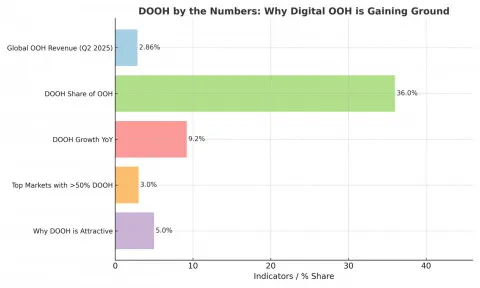
What do the latest numbers say?
Recent data confirms a major shift:
In some countries, the share of digital formats is even higher:
UK: 63% of all OOH ad spend goes into DOOH
Netherlands: DOOH accounts for over 55% of the OOH mix
Singapore: nearly 70% of all OOH is now digital
The CEE region (Slovakia, Czech Republic, Hungary, etc.) is quickly following this trend. In fact, Slovakia has real potential to become an innovation hub for DOOH, thanks to platforms like Lurity.
Why are brands turning to OOH?
OOH today offers what digital often lacks:
- Guaranteed visibility – no skipping, no ad blockers
- Large emotional formats – part of the physical world
- Safe and ethical environment – no cookies needed
- Flexibility and real-time planning – thanks to smart digital tools
DOOH is approaching the measurability of online advertising—without its downsides. Platforms like Place Exchange or Vistar Media already offer DOOH integration with digital analytics, attribution, and frequency capping.
DOOH = The Medium of the Digital Future
Digital OOH is no longer just a "supporting channel." In more and more campaigns, it plays an equal—or even leading—role. Here's why:
- It's visible: Screens in public places, malls, gyms, and transit zones simply can't be ignored
- It's engaging and contextual: Content can adapt to weather, time, location, and even real-time retail data
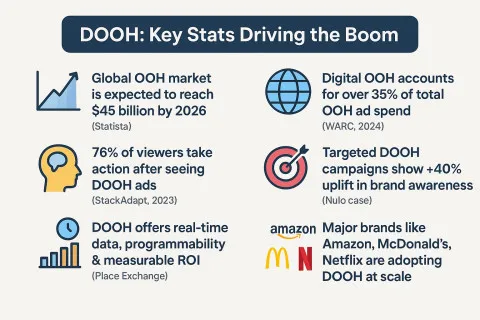
- It's effective: According to Nielsen ROI 2024, OOH delivers an average return of 6:1—and often higher
- It's measurable: Platforms like Lurity provide real-time data on impressions, locations, timing, and performance
A Campaign That Truly Hits
Even brands that were originally "online-only" are increasingly including DOOH in their media mix. Why? Because when combined with mobile, online, or social media, DOOH becomes a powerful interest trigger. Campaigns can use QR codes, geofencing, retargeting, or be part of event and promo strategies.
Example? The Nulo pet food brand (USA) launched a DOOH campaign targeting an 8 km radius around their stores. The result? +40% brand awareness and a significant increase in store traffic.
Final Takeaway?
OOH—and especially DOOH—is the future. It's the most visible physical presence of a brand at a time when the online world is increasingly cluttered and distrusted. For brands looking to build visibility without overwhelming, trust without cookies, and creativity without skip buttons, DOOH is becoming an increasingly attractive choice.